
Step 1: Check Your Water Meter
Your water meter is the best diagnostic tool in your home. It is usually located in the basement mechanical or furnace room. Most meters have a small dial or digital indicator that moves when water is flowing.
How to test for hidden water usage:
- Stop using all water in the home
- Make sure no toilets, faucets, or appliances are running
- Watch the meter dial for 10 to 15 minutes
If the dial continues moving, water is being used somewhere - even if you do not see a leak. That means something is running silently.
Why the City Sometimes Alerts You
The City of Vaughan often monitors abnormal usage and may notify homeowners when consumption spikes. That is because water conservation benefits everyone.
The drinking water we use is treated Lake Ontario water, and wastewater is processed before being returned to the same ecosystem. Protecting that cycle matters - which is one reason harsh drain chemicals like Drano are strongly discouraged.
Water is precious.
The 10 Most Common Causes of a High Water Bill
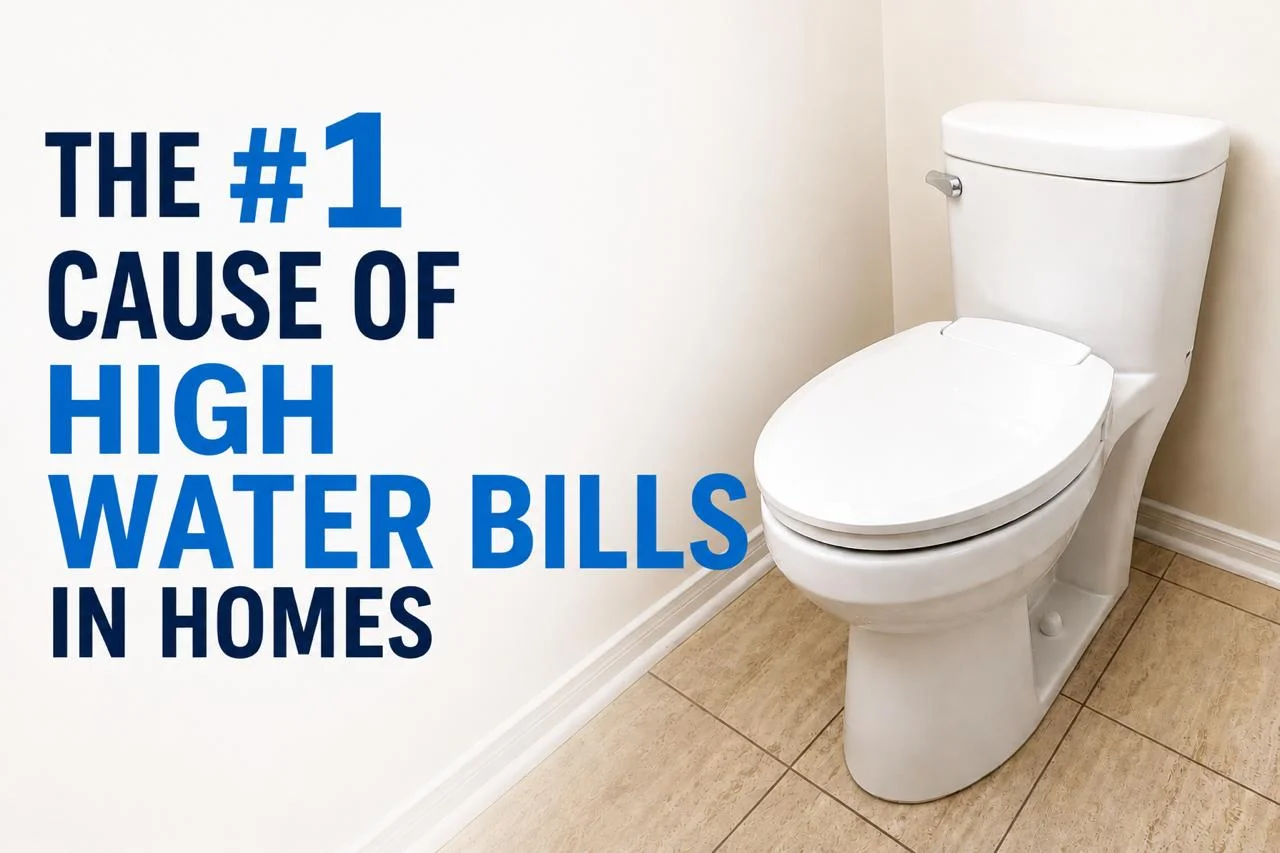
1. Running Toilets
Toilets are responsible for a huge percentage of hidden water loss. If you hear a toilet running, that is the obvious sign. But many leaks are silent.
A failed fill valve can constantly send water into the overflow tube. You will not see water on the floor - but the meter will spin and the bill will rise.
The Food Dye Test:
- Add a few drops of food colouring into the toilet tank
- Do not flush
- Wait 10 to 15 minutes
If colour appears in the bowl, the flush valve or flapper is leaking and needs replacement. Repeat this test for every toilet in the home.
If you need a toilet repaired or replaced, Hive 5 offers same-day service across Vaughan and Woodbridge.
2. Dripping Faucets
If your shower faucet, tub faucet, or sink faucet has a visible drip, do not ignore it. Even a slow drip wastes thousands of litres per month and adds up fast over a 60-day Vaughan billing cycle.
3. Laundry Faucets with Primer Lines
Older laundry faucets sometimes include a primer line that sends water to the floor drain to keep the trap sealed. If the faucet develops an internal leak, the water can flow directly into the drain without being visible. You may not see a leak - but water is constantly running.
If your laundry faucet is 15 to 20 years old and has a primer line, it is worth inspecting or replacing.
4. Reverse Osmosis Systems
Reverse osmosis filtration systems can occasionally get stuck in a constant drain cycle. If all other checks fail, isolate the RO system and watch the water meter again. If the meter stops moving, the system needs service.
5. Water Softeners
We have seen water softeners get stuck in regeneration or purge mode and run water 24 hours a day.
If you have a softener:
- Check if it sounds like it is constantly running
- Inspect for error codes
- Temporarily bypass it and re-check the meter
6. Outdoor Hose Bibs and Irrigation Systems
Outdoor leaks are easy to miss because the water disappears into soil and homeowners often do not notice until the bill arrives. Check for:
- A hose bib left slightly open
- A hose connected and dripping
- Irrigation systems stuck on
- Underground sprinkler leaks
Summer irrigation failures are one of the most common causes of high seasonal water bills in Vaughan, Woodbridge, and Kleinburg.
7. Furnace Humidifiers
Whole-home humidifiers run water while the furnace operates. If the solenoid valve fails open, water can run continuously. This is a hidden but serious source of water loss that many Maple and Vaughan homeowners overlook heading into winter.
8. Aging Shut-Off Valves and Supply Lines
If a shut-off valve or braided supply line is slowly weeping water, it may be dripping into a cabinet or floor without being noticed. This is one of the most common findings during a Hive 5 whole home plumbing inspection.
9. Leaking Appliances
Dishwashers, refrigerators with water lines, and boiler fill valves can all leak internally without obvious signs. If you have ruled out toilets, faucets, and outdoor sources, check behind and under your major appliances.
10. Underslab Pipe Leaks
In rare cases, older copper or buried water lines can develop pinhole leaks beneath the concrete slab of a home. When this happens, water can continuously escape underground without any visible signs inside the house.
Because the leak is below the slab, homeowners may not see water damage. The only clues are often a spinning water meter, unexplained high water bills, or warm spots on the floor in heated homes.
We have encountered situations in Vaughan where these hidden underslab leaks ran for months before being discovered. While uncommon, they are important to consider when all visible plumbing checks come back normal.