
How Weeping Tile Feeds Your Sump Pump
Around your home's foundation is a hidden drainage system called weeping tile. It's a perforated pipe, modern plastic or older clay, laid along the footing. It collects groundwater from the surrounding soil and carries it away from the house.
Where that water goes depends on the age of your home:
- Older homes: weeping tile often connects to the floor drain, which leads into the sewer.
- Newer homes: water usually drains into a sump pit and is pumped out, or runs to a separate storm line.
Why Sump Pumps Are So Common in York Region
Groundwater levels here vary with soil, elevation and weather. Clay-heavy soil holds water, and spring melt and heavy rain push the water table up fast. In many homes, especially newer builds, a sump pump is required by code. Adding a basement walkout entrance or lowering a basement floor often requires a sump system too, because the floor drains in those setups depend on the pump to work. If you're planning that kind of project, our basement plumbing team can plan the sump system with it.
A Common Mistake: Gutters and Downspouts
If your downspouts empty right beside your foundation, you're sending large volumes of roof water straight into your weeping tile and sump pit. The pump has to work harder, and the risk of overload and flooding goes up. The fix is simple: extend your downspouts well away from the house.
How to Check If Your Sump Pump Is Working
It takes a few minutes:
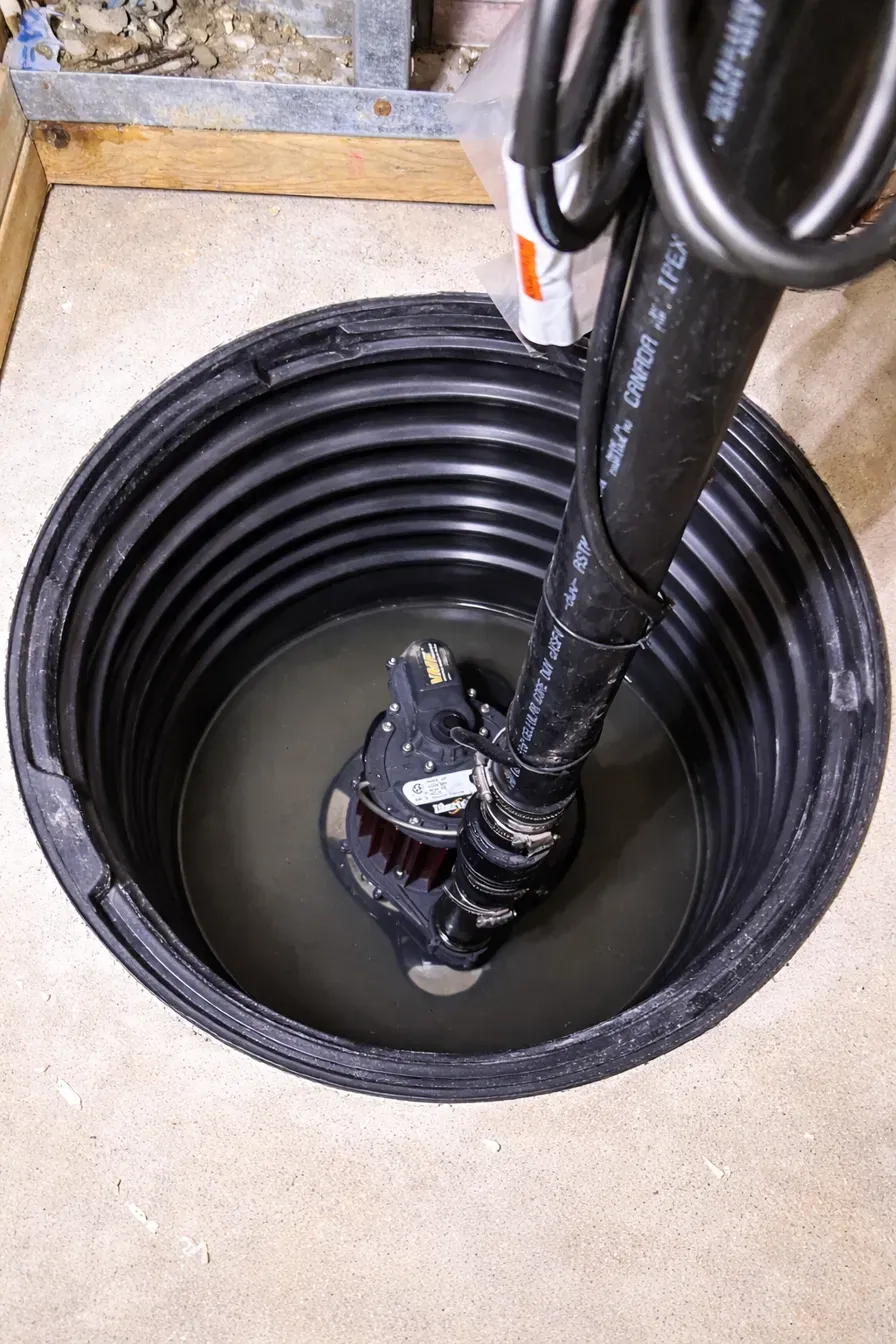
- Find your sump pit, usually a round lid in the basement floor.
- Open the lid and look inside.
- Find the float switch.
- Lift it gently. The pump should start right away.
What you see in the pit tells you something too. A dry pit is a good sign of low groundwater. Some water is normal during rain or snow melt. Heavy, steady flow means your system needs to be in good working order.
If the lid is bolted down with a pipe running up through it, stop. That's likely a sewage ejector pit, not a sump pit, and it shouldn't be opened.
Types of Sump Pumps
- Builder-grade pumps: basic, low-cost units common in new homes. Lower horsepower, more plastic parts and a shorter lifespan. They work, but aren't built for heavy, long-term demand.
- Pro-grade pumps: cast iron or aluminum, stronger motors, better floats and a longer life. They handle higher volumes and perform better in heavy storms.
- Battery backup pumps: a second pump that runs on a deep-cycle marine battery when the main pump fails or the power goes out.
- Water-powered backup pumps: run on city water pressure with no electricity or battery. They pump less than a main pump, but keep working through long outages.
Most floods happen during storms, and storms often bring power outages. Without a backup, nothing protects your basement once the main pump stops. Learn more about our sump pump installation and backup systems.
The Check Valve: Small Part, Big Job
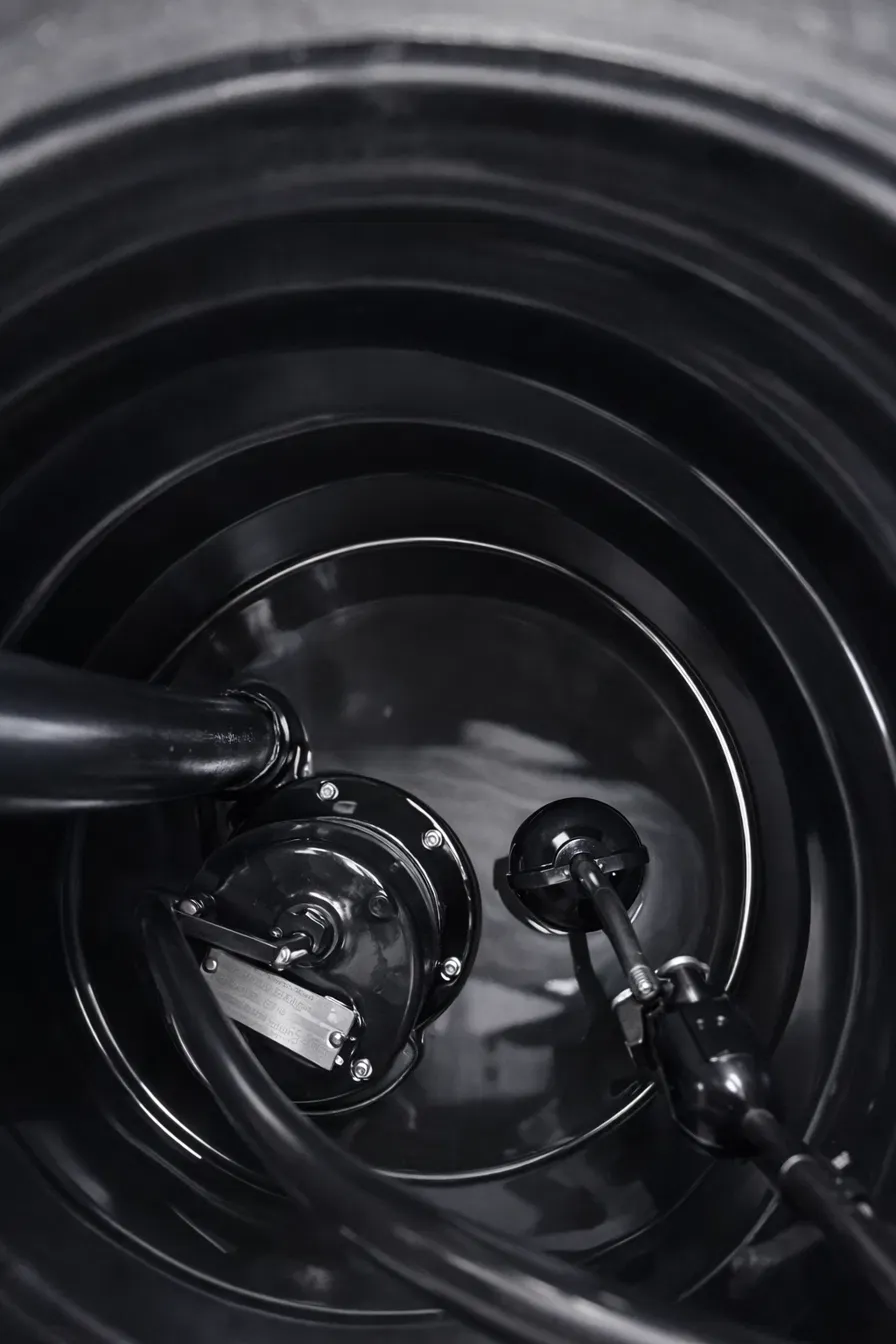
A check valve sits on the discharge pipe above the pump. It stops water from flowing back into the pit after the pump shuts off. Without one, water drains back down and the pump cycles over and over, wearing it out faster. A working check valve extends pump life, cuts noise and improves efficiency. The usual sign of trouble is a pump that turns on and off too often.
Where the Water Goes Matters
A sump pump only works if the water it pumps out stays out. Common problems include a discharge pipe that ends too close to the foundation, water flowing back toward the house, and poor grading. The water then returns to the weeping tile, the pump runs more often, and the risk of failure goes up. The discharge should end at least 6 to 10 feet from the house, pointed away from it, and not in a low spot where water collects.
Frozen Discharge Lines in Winter
This is one of the most common sump problems in Ontario. Water leaves the pipe, freezes outside, and blocks the line. The pump keeps running, but the water has nowhere to go and backs up into the basement. Watch for a pump running constantly, little or no water coming out outside, or unusual sounds. Proper pipe slope, short exterior runs, freeze-resistant fittings, and keeping the outlet clear of snow and ice all help prevent it.
Give Your Sump Pump Its Own Circuit
A sump pump should run on a dedicated electrical circuit, with nothing else plugged into that outlet. We often find extension cords, freezers sharing the same outlet, or GFCI outlets that trip and shut the pump off without anyone noticing. A sump pump only protects your home if it has power, so a simple electrical issue can lead to a flooded basement. A dedicated circuit from the panel and a properly installed outlet near the pit, plus an alarm, prevent that.
Warning Signs
Signs Your Sump Pump Has a Problem
- !Pump running constantly
- !Pump not turning on
- !Unusual noise
- !Rising water level in the pit
- !Damp or musty basement
- !Frequent on-and-off cycling
Notice any of these? Get it checked before the next storm.