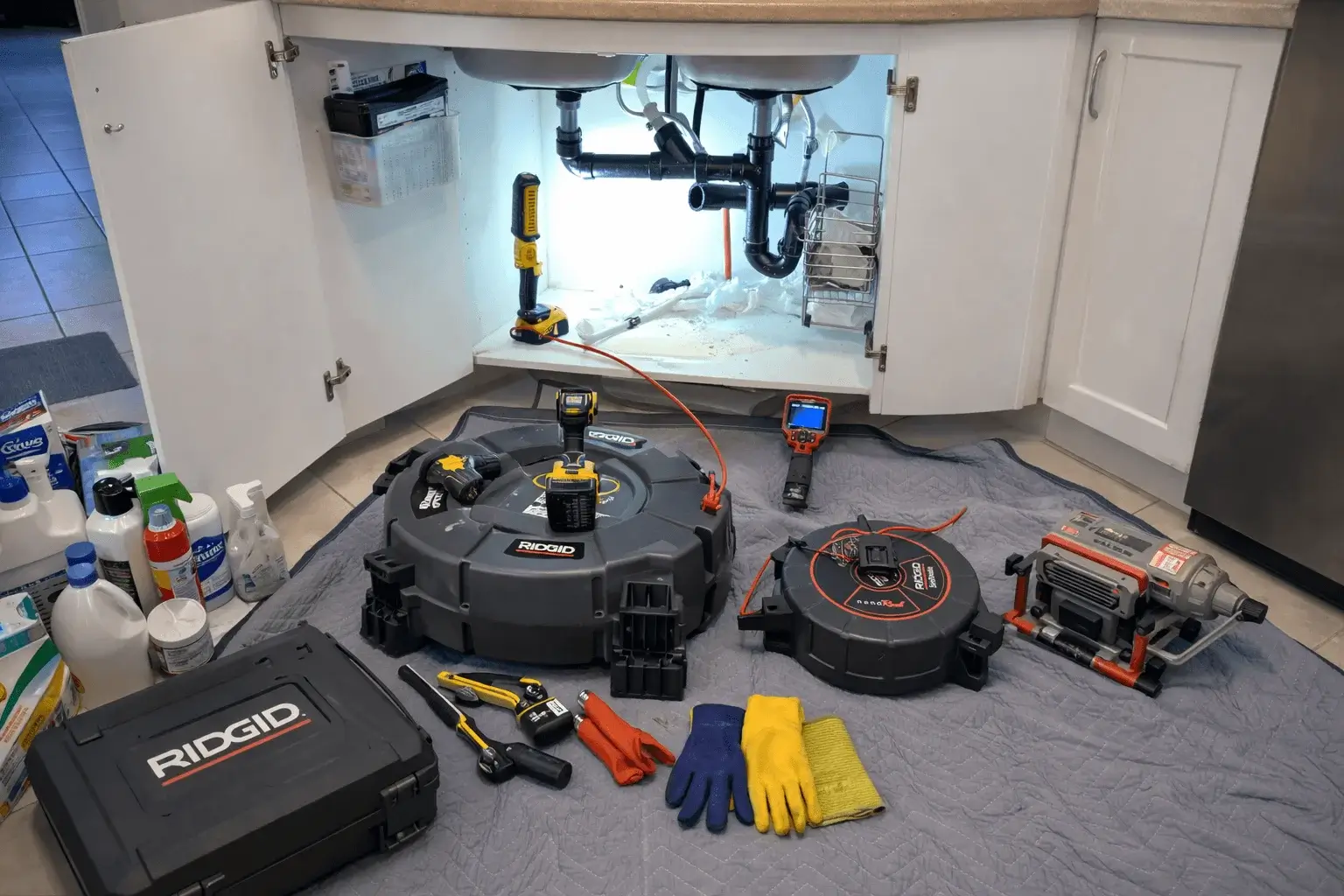

Common Signs of a Kitchen Drain Clog
Kitchen drain problems do not always start with a full backup. Common early warning signs include:
- Slow-draining kitchen sink
- Gurgling sounds when water drains
- Water backing up when the dishwasher runs
- Grease or sewage smells from the sink
- Repeated clogs that return weeks or months after snaking
- Water backing up in the sink when laundry or other fixtures are used
These symptoms often indicate partial grease restrictions, not a single object blocking the pipe.
Why Kitchen Drains Clog in the First Place
Most kitchen drain clogs are caused by a combination of factors:
- Grease, fats, and oils cooling and hardening inside the pipe
- Starches like rice, pasta, and potatoes swelling and sticking to grease
- Coffee grounds accumulating like sediment
- Soap residue binding grease to the pipe walls
- Garbage disposal misuse
- Improper pipe slope, bellies, or older piping materials
Unlike toilet drains, kitchen drains can continue working even when over 70 to 80 percent restricted - sometimes with as little as a half-inch opening remaining - until the final blockage occurs.
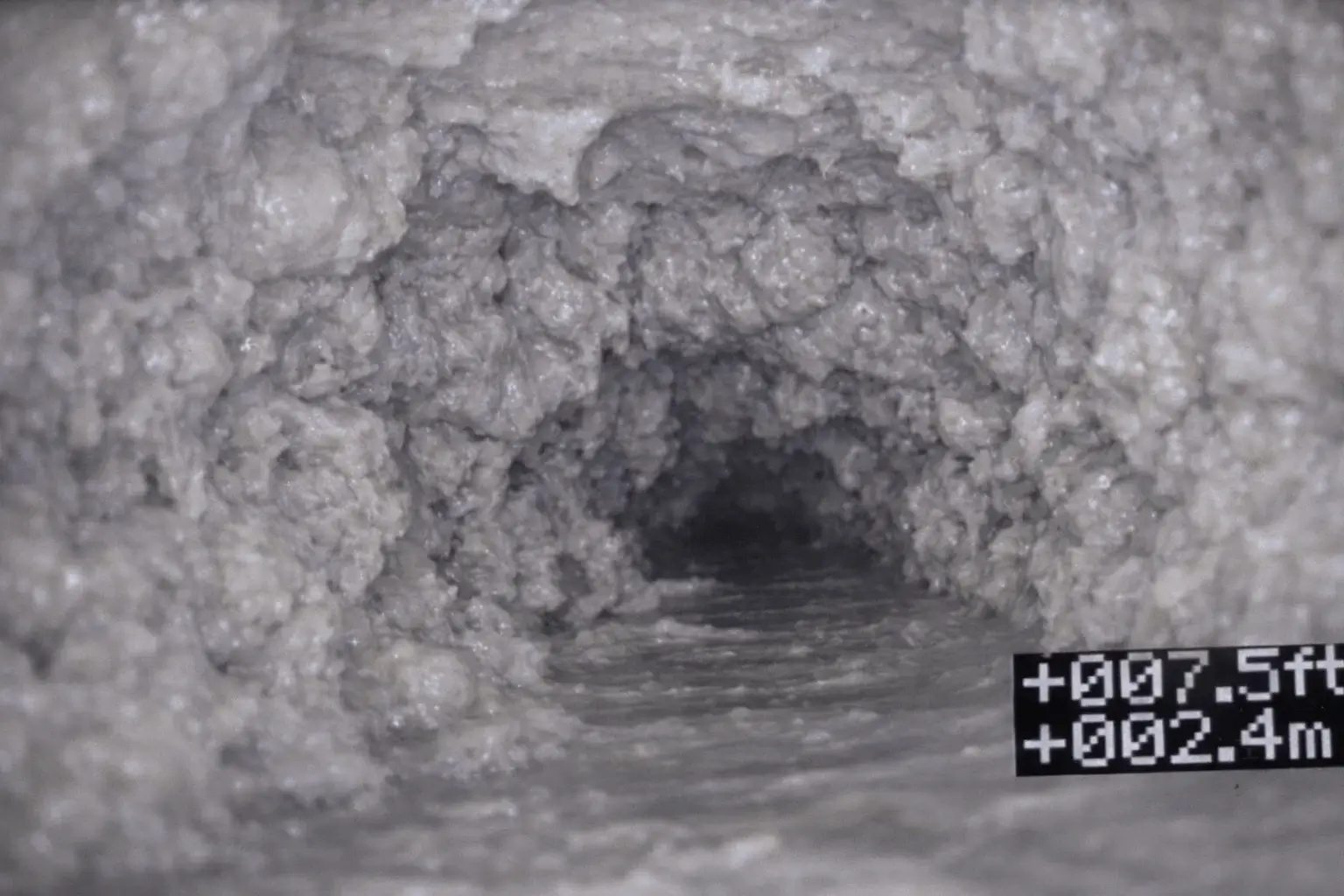
How Kitchen Drain Plumbing Is Typically Installed
In most homes, kitchen drain lines are 1.5 to 2 inches in diameter, starting at the sink and running horizontally inside the wall. The pipe then turns downward toward the basement, where it connects into the main building drain, typically 4 inches, before continuing under the concrete slab.
Proper installations include accessible cleanouts. Cleanouts are critical because they allow:
- Effective drain snaking
- Drain camera inspections
- Professional cleaning without removing fixtures or opening walls
Missing or buried cleanouts often make kitchen clogs harder, more invasive, and more expensive to resolve properly.
Step 1: Is This a One-Time Clog or a Recurring Problem?
One of the most important diagnostic questions is: did this clog happen once, or does it keep coming back?
- If snaking restores flow and the issue never returns, the problem was likely minor
- If snaking only helps temporarily, the pipe is still coated with grease
Recurring kitchen drain clogs almost always indicate a pipe wall problem, not just a single obstruction. This distinction determines whether a simple clearing is sufficient or whether a long-term solution is required.
If you are in Vaughan or Woodbridge and dealing with a drain that keeps coming back, call Hive 5 at (647) 535-5560 for a proper diagnosis.
Step 2: Determining Where the Clog Is Located
Kitchen drain blockages can occur in several areas:
- Above ground - in the 1.5 to 2 inch kitchen branch line
- In the vertical drop or connection point
- Downstream - in the larger building drain, often below the slab
Because different pipe sizes require different equipment, proper investigation is critical. In many cases, both the kitchen branch line and the downstream drain need to be addressed, especially in older homes or systems that have never been properly cleaned.
It is common for grease buildup to begin underground and slowly work its way upward, coating more of the pipe over time.
Why Drain Camera Inspection Matters
A proper diagnosis requires an accessible cleanout and a professional drain camera inspection. A camera allows the plumber to confirm:
- Grease buildup
- Pipe slope issues
- Bellies or dips
- Cracks or damage
- Root intrusion
- Overall pipe condition
However, if a pipe is completely packed with grease, initial snaking is required first. Without restoring some flow, a camera cannot clearly see the pipe walls. This step-by-step approach avoids guesswork and unnecessary work.
Our drain camera inspection service is available across Vaughan, Woodbridge, and York Region.
Why Standard Snaking Is Often Not Enough
Most kitchen drain clogs are caused by layers of grease, not solid objects. A traditional power snake:
- Breaks through the blockage
- Restores temporary flow
- Leaves grease behind on the pipe walls, especially along the top
That leftover grease quickly traps new debris, leading to repeat clogs weeks, months, or even years later. This is why many homeowners experience the cycle of getting it snaked, then clogged again.
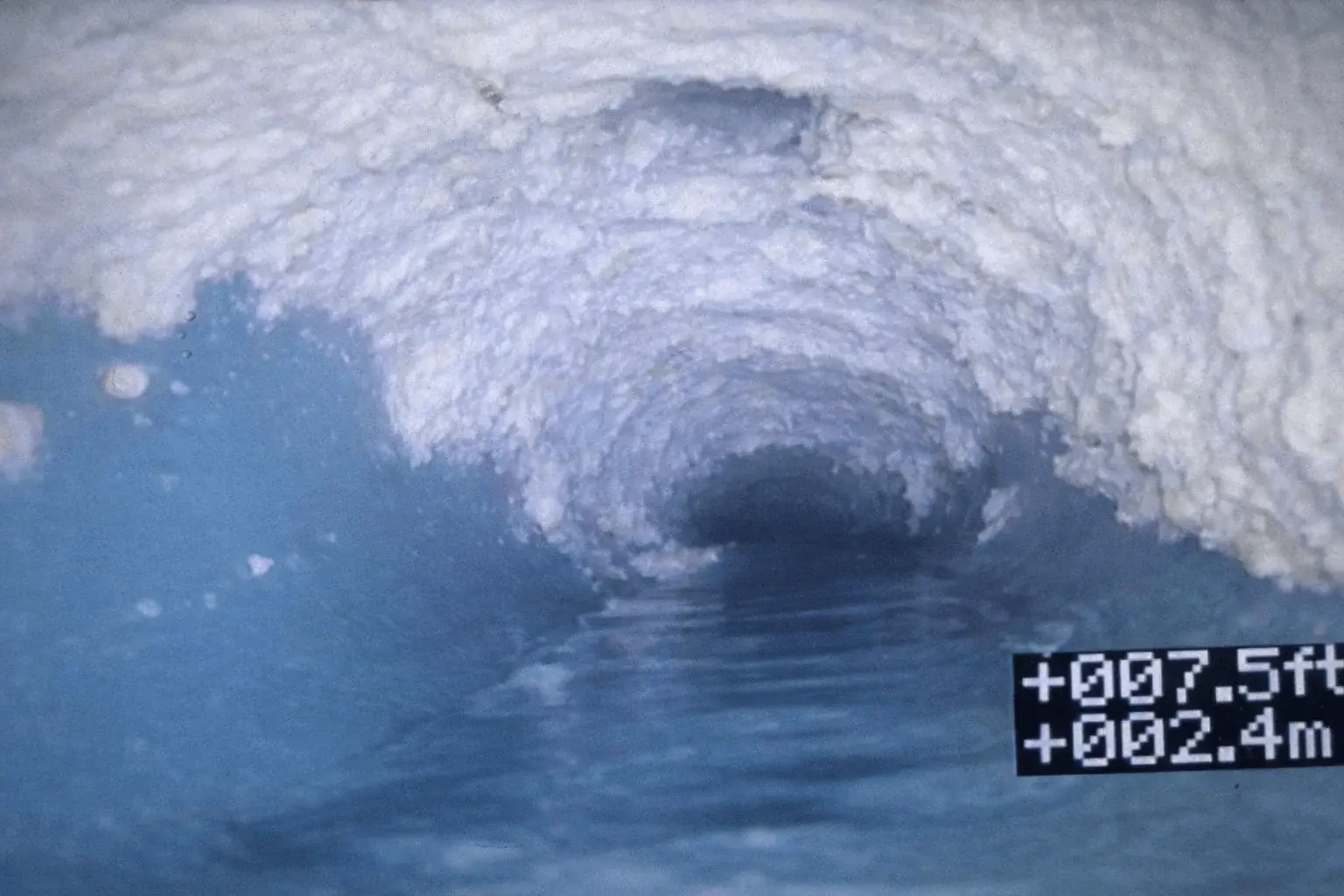
The Correct Way to Restore a Kitchen Drain Line
Once initial flow is restored, the proper method to clean a kitchen drain is flex-shaft drain cleaning.
Unlike a standard snake, the flex-shaft system:
- Scrubs the full 360 degree circumference of the pipe
- Removes hardened grease from all sides
- Flushes debris downstream while cleaning
When combined with camera inspection, proper flushing, and verification of slope and pipe condition, the kitchen drain line can often be restored to near-new condition - provided there is no structural damage.
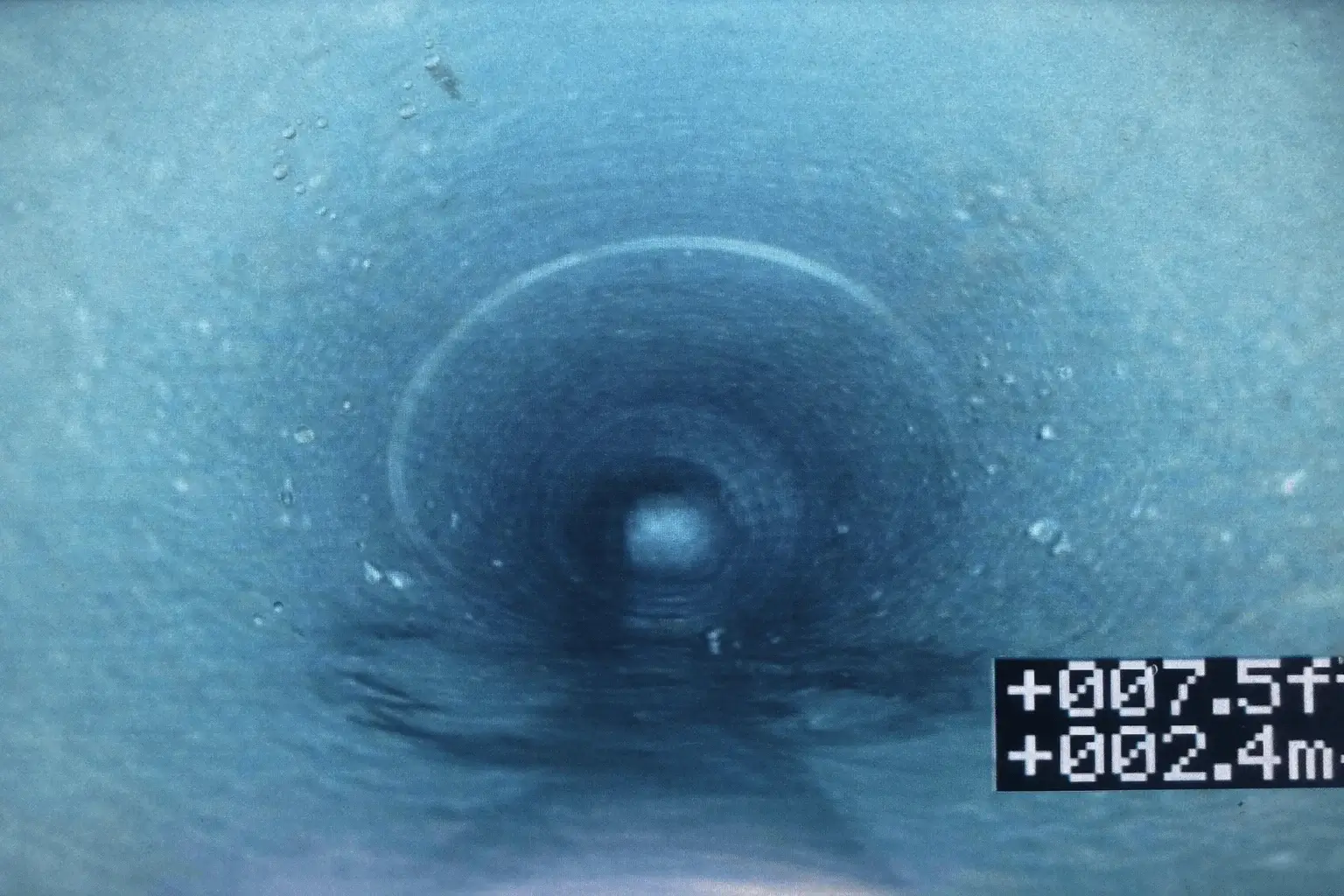
When Cleaning Alone Is Not the Answer
If inspection reveals any of the following, cleaning alone is not a permanent solution:
- Poor or insufficient slope
- Bellies or dips holding grease
- Cracked or deteriorated piping
- Severe grease saturation in compromised pipe
In these cases, pipe replacement is the only long-term fix. Ideally, a kitchen drain line should not exceed approximately 25 feet before transitioning underground, as longer runs significantly increase the risk of grease buildup and recurring clogs.
If you have not had your plumbing inspected recently, a Hive 5 whole home plumbing inspection starting from $249 assesses your drain lines, pipe condition, and overall plumbing system before problems escalate.
What Homeowners Should Not Do
To avoid making the problem worse:
- Avoid chemical drain cleaners - they rarely remove grease and can damage or weaken piping, and can cause bodily harm if not used safely
- Do not pour boiling water hoping it will melt grease. It re-solidifies downstream and sudden temperature changes can crack plastic piping
- Do not treat a garbage disposal like a trash can
- Repeated plunging often pushes grease further into the system
These methods may offer temporary relief but usually shorten the lifespan of the plumbing system.
How to Reduce Future Kitchen Drain Clogs
Good habits make a big difference:
- Let grease cool and dispose of it in the green bin, not the sink
- Wipe greasy pans with a paper towel before washing
- Avoid rinsing rice, pasta, or other starchy foods down the drain
- Run plenty of cold water when using a garbage disposal
- Schedule a professional drain line camera inspection if you cook often or host frequently