
Step 1: Ask These Questions First
Before inspecting anything, take a moment to determine how the issue is happening.
Is this a recent issue?
Did the hot water suddenly change, or has it been gradually getting worse over time?
- Sudden changes often indicate a mixing valve issue, thermostat problem, or fixture cartridge failure
- Gradual decline often points to sediment buildup or aging equipment
Is it happening everywhere in the house?
Turn on hot water at multiple fixtures including the kitchen sink, bathroom faucet, shower and tub, and laundry tap.
- If the issue happens everywhere, the problem is likely water heater related, mixing valve related, or main hot water system related
- If the issue happens at only one fixture, the problem is usually local to that fixture
Is it constant or intermittent?
Each symptom can point to a different cause:
- Starts hot then goes cold quickly - possible dip tube issue or mixing valve failure
- Never gets hot at all - heater not producing heat
- Temperature fluctuates between hot and cold - failing mixing valve or shower cartridge
Is it only happening in the shower?
Many homeowners think their water heater is failing when the issue is actually a worn shower cartridge. Modern single-handle shower valves contain pressure balancing or thermostatic cartridges. As they age, they can restrict hot water flow, allow cold water to mix in, and prevent the handle from reaching full hot. In this case, the rest of the house may have perfectly normal hot water.
Step 2: Check If You Have a Mixing Valve
If you have a tank-type water heater, it is usually located in the basement utility room or mechanical area. Take a quick look at the piping on top of the tank.
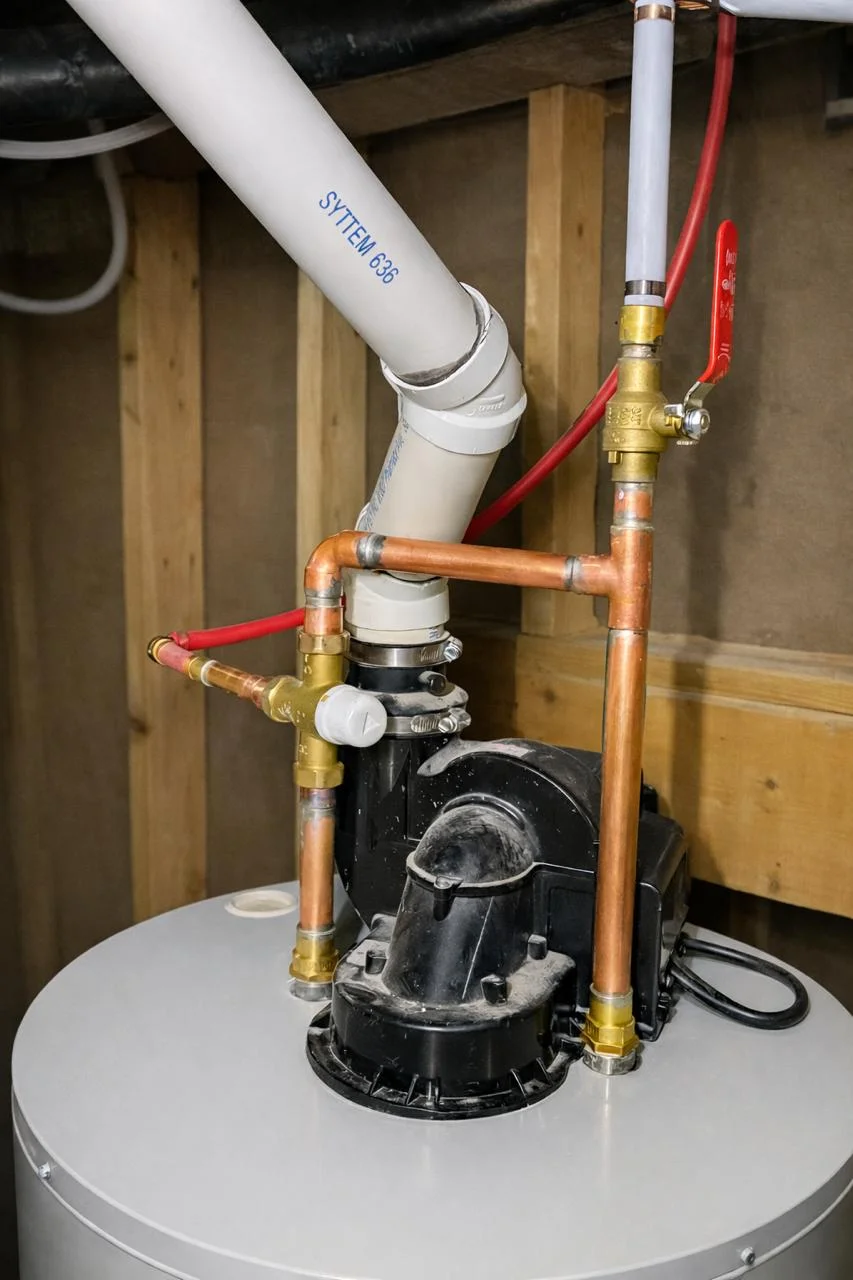
Two pipes onlyIf you see two pipes coming directly out of the tank, your system likely does not have a mixing valve.
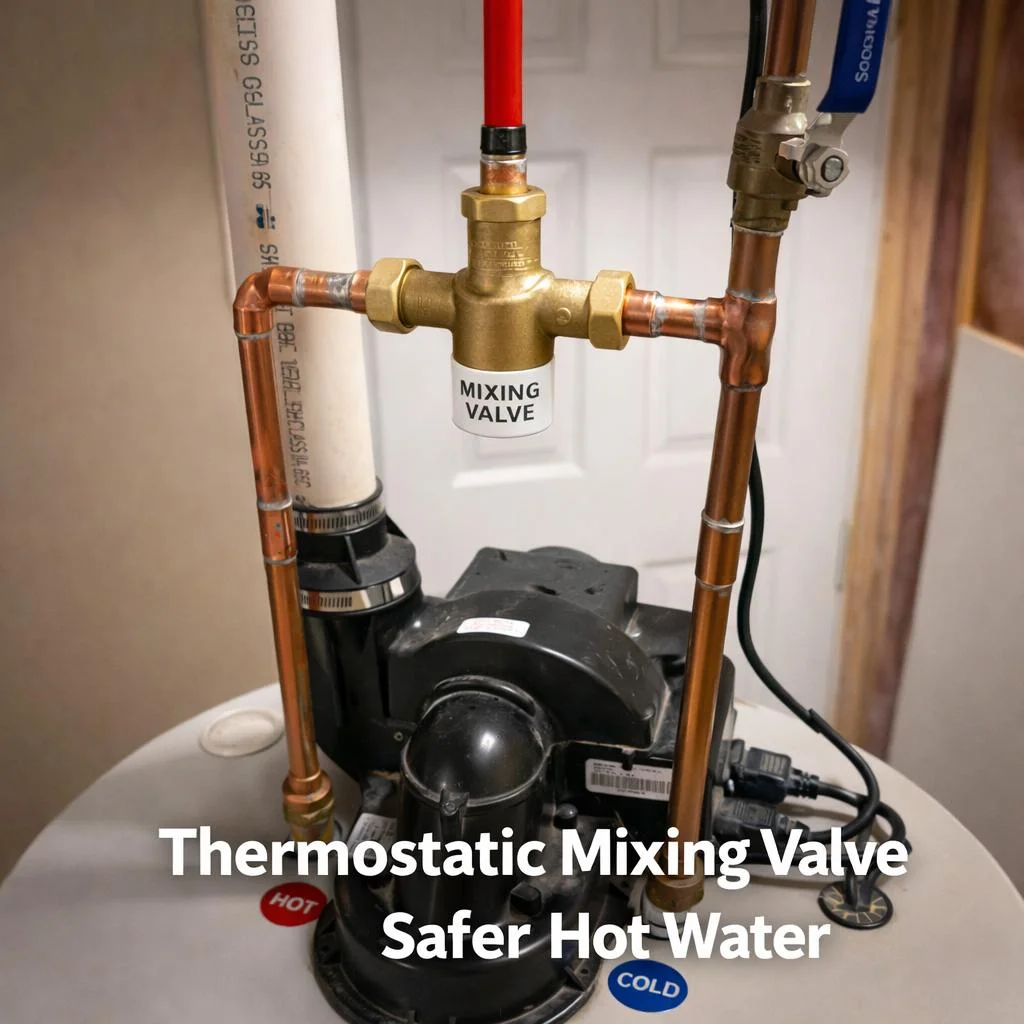
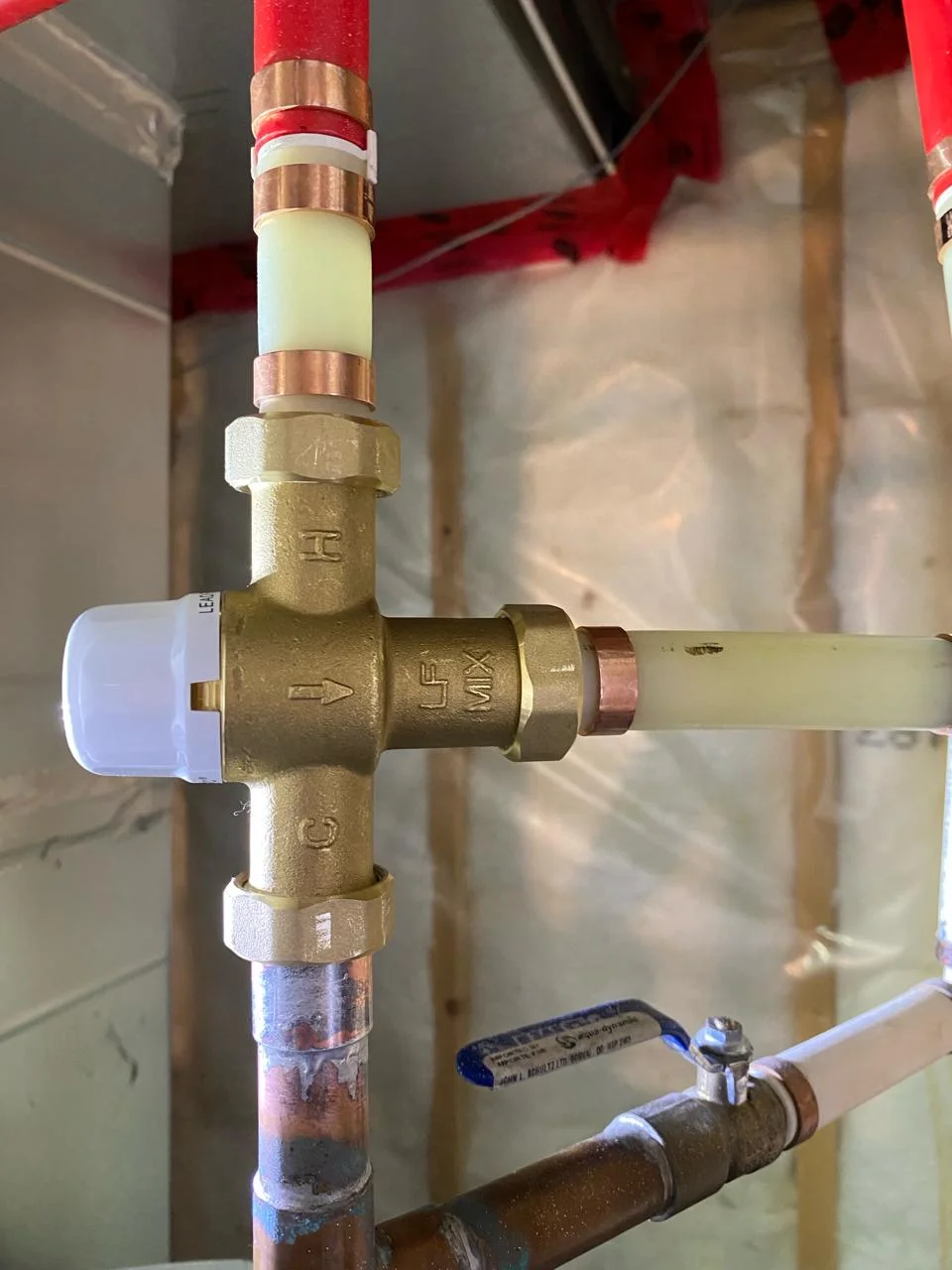
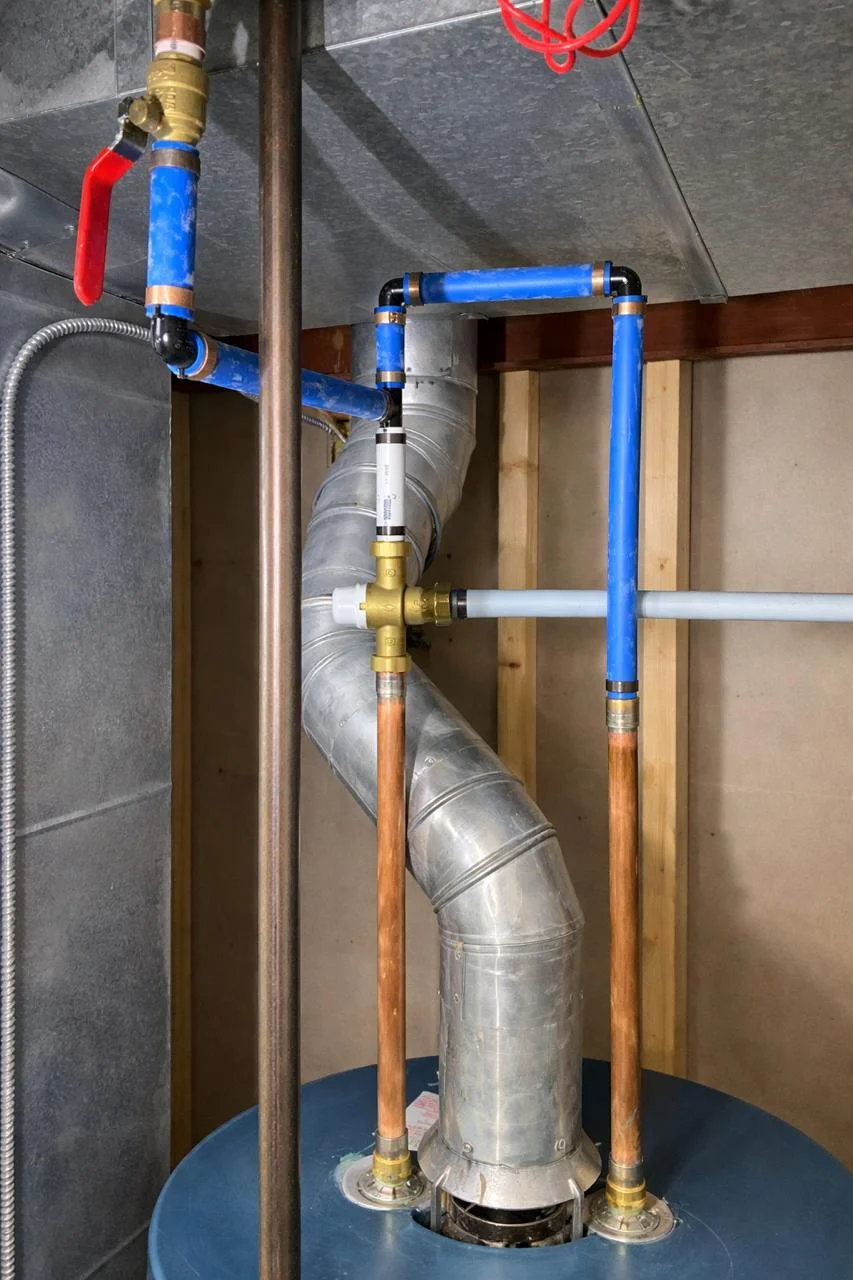
Three pipes with a device in betweenIf the hot water pipe from the tank goes into a metal device with three connections, and then one pipe continues into the house, you have a mixing valve, also called a tempering valve.
What a Mixing Valve Does
A mixing valve blends very hot water from the tank with cold water before sending it through the home. This protects against scalding injuries and increases usable hot water capacity.
LocationTemperatureInside water heater140°F (60°C)Delivered to fixtures120°F (49°C)
Step 3: Check the Temperature Before and After the Mixing Valve
A quick observation can reveal the issue. If the pipe coming from the tank is hot but the pipe leaving the mixing valve is lukewarm or cold, the mixing valve may be failing.
Mixing valves wear out over time due to mineral buildup, internal cartridge wear, and water quality conditions. Some valves can be adjusted slightly, but many older ones require replacement.
Our service vans carry common mixing valves in stock, allowing us to restore hot water quickly across Vaughan and Woodbridge. Call (647) 535-5560 for same-day hot water diagnostics.
Step 4: Check the Water Heater Temperature Setting
If the water entering the mixing valve is not hot, inspect the water heater itself.
Gas water heaters have a gas control valve near the bottom of the tank with temperature settings such as Warm, Hot, or A, B, C positions. You can try increasing the setting slightly.
Allow 30 to 60 minutes for the heater to recover before evaluating the change.
Step 5: Sediment Buildup in Older Water Heaters
Over time, sediment accumulates at the bottom of the tank, especially in areas with mineral-heavy water like many homes across Markham and North York. This buildup can:
- Reduce heating efficiency
- Interfere with temperature sensing
- Cause inconsistent hot water
In some cases the heater may produce either lukewarm water or dangerously hot water. Annual flushing and descaling is recommended. If you have not had your water heater inspected recently, our whole home plumbing inspection starting from $249 includes a full water heater assessment.
Step 6: Tankless Water Heater Reset
If your home uses a tankless water heater, troubleshooting is often more complex. Sometimes cycling power can reset the system:
- Turn the unit off
- Wait 5 minutes
- Turn it back on
If error codes continue, a licensed gas technician will be required. Tankless units commonly experience scale buildup, ignition issues, gas supply problems, and flow sensor faults. Annual descaling is recommended.
Other Causes Homeowners Often Miss
Sometimes the water heater is not the problem at all. Other possible causes include:
- Failing shower cartridge
- Faulty single-handle faucet cartridge
- Partially closed shutoff valves
- Cross-connection between hot and cold lines
- Excessive hot water demand in the house
If you have noticed a recent spike in your water bill alongside hot water issues, a hidden leak or running appliance may also be contributing to the problem.