
What Is Reverse Osmosis?
Reverse osmosis is a filtration process that forces water through a semi-permeable membrane, removing impurities at a microscopic level.
It helps eliminate:
- Chlorine and chemical taste
- Fluoride
- Heavy metals like lead and copper
- Sediment and rust
- Dissolved solids (TDS)
- Odours and unwanted flavours
The result is clean, purified drinking water directly in your home.
Why Reverse Osmosis Matters Across York Region
Municipal water in Vaughan and across York Region is treated and safe. But by the time it reaches your home, it can still carry:
- Residual chlorine
- Sediment from aging infrastructure
- Trace contaminants
An RO system adds a final layer of protection at the point of use, giving you control over the quality of the water you drink and cook with. For homeowners in Woodbridge, Maple, and Kleinburg who have noticed changes in water taste or scale buildup in kettles and appliances, an RO system makes an immediate and noticeable difference.
The Benefits of an RO System
Better TasteYou will notice it immediately, especially in coffee, tea, and cooking.
Healthier WaterRemoves contaminants you do not want in your body.
Cost SavingsEliminates the need to purchase bottled water.
Eco-FriendlyCuts down on plastic waste significantly over time.
ConvenienceClean water available instantly with no hauling cases of water.
Why a 5-Stage RO System Is the Sweet Spot
There are many systems available including 3-stage, 5-stage, and even 7-stage systems. In our experience, 5-stage systems offer the best balance of performance and simplicity.
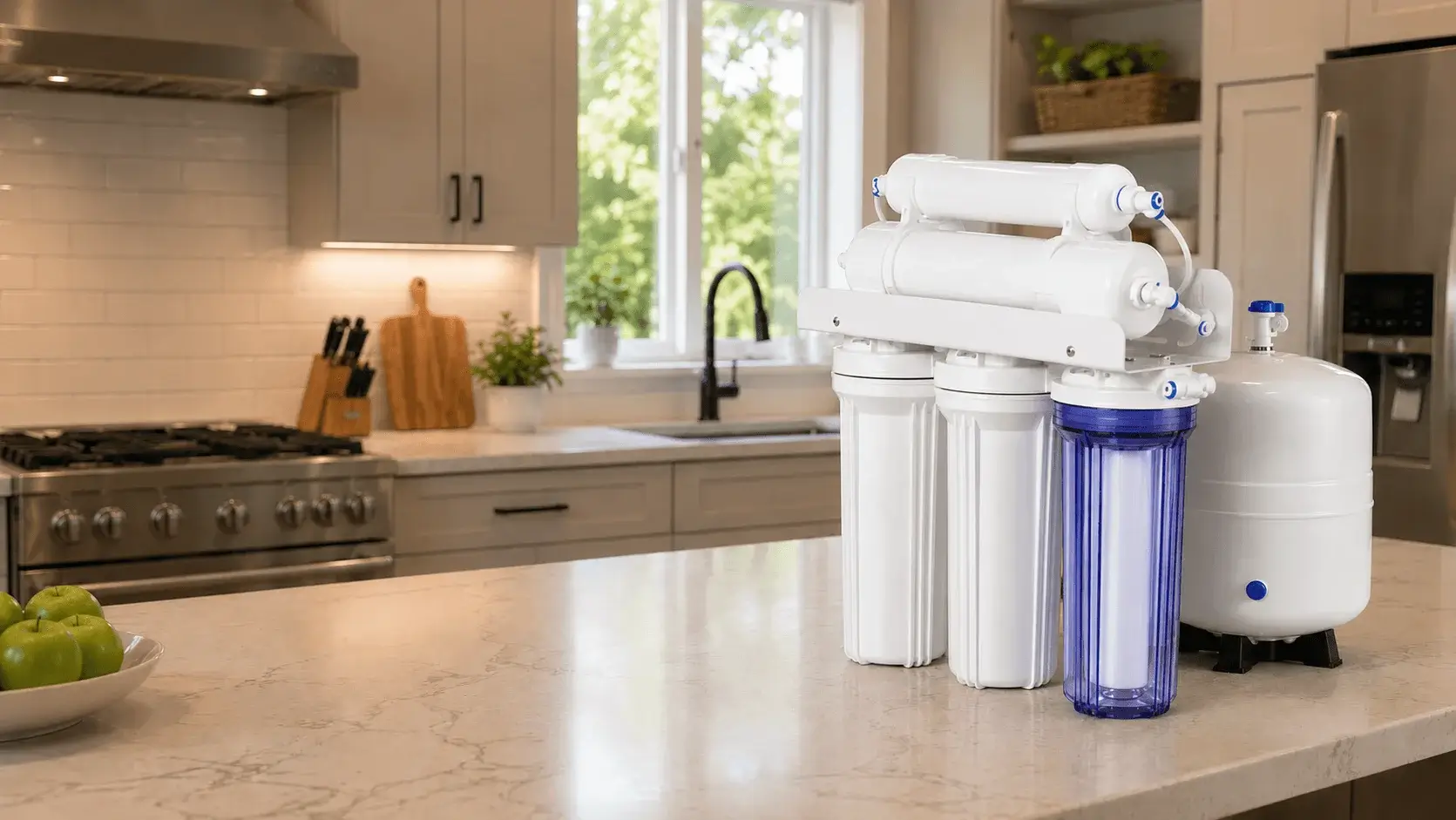
A typical 5-stage system includes:
- Sediment filter - removes dirt and particles
- Carbon filter (GAC) - removes chlorine and chemicals
- Carbon block (CTO) - fine filtration before the membrane
- RO membrane - the main purification stage
- Post-carbon filter - final polish for taste
Why not more stages? More filters do not always mean better water. Extra stages add cost and maintenance. 5-stage systems already remove up to 95 to 99% of contaminants.
At Hive 5, we recommend systems that are effective, reliable, and easy to maintain. Not overcomplicated.
Interesting Facts About RO Water
- RO membranes filter down to 0.0001 microns
- Removes up to 99% of dissolved contaminants
- Used in hospitals, laboratories, and large-scale water treatment facilities
- Widely used by Tim Hortons and Starbucks to improve taste consistency
- Helps reduce scale buildup in kettles and coffee machines, especially important for fully automatic machines
How Installation Works
A proper RO installation is clean, precise, and built to last. Here is what the process looks like when Hive 5 installs your system:
1. Dedicated Water Feed We connect the system to your cold water line and install a proper shut-off valve for servicing.
2. Faucet Installation We drill a clean hole in the countertop at a location of your choosing and install a dedicated RO faucet.
3. System Setup Under the Sink Filters are mounted securely and the storage tank is installed neatly and accessibly.
4. Drain Connection The system is properly connected to the drain for wastewater discharge.
5. Start-Up and Flush We fill and flush the system, then test for leaks and proper operation.
6. Walkthrough We show you how everything works and when to replace filters.
If you have noticed higher water usage lately, it is worth checking whether your RO system is stuck in a drain cycle. This is one of the causes covered in our high water bill troubleshooting guide.
Maintenance: Simple and Predictable
RO systems are low-maintenance when installed correctly:
- Pre-filters: every 6 to 12 months
- Membrane: every 2 to 3 years
- Post-filter: annually
Maintenance intervals can vary depending on your local water quality. If your kettle builds scale quickly, filters will need replacing more often. If it stays clean, they will last longer.
At Hive 5, we offer ongoing maintenance and filter replacement so your system continues to perform like new. With every installation we recommend a 3-year filter package so you are fully prepared with everything on hand when it is time for maintenance.
Can Reverse Osmosis Be Installed for the Whole House?
We get asked this often. The short answer is that in most cases it is not the right solution.
Why whole-home RO is not common:
Slow production - RO systems produce water gradually and cannot keep up with full household demand including showers, laundry, and multiple fixtures running at the same time.
Water waste - RO systems reject water during filtration. On a whole-home scale this becomes inefficient and costly.
Pressure drop - Without large tanks and booster pumps you will experience noticeable pressure loss throughout the home.
High cost and complexity - Whole-home systems require additional equipment, setup, and ongoing maintenance, making them expensive and often unnecessary.
For whole-home water quality concerns, a water softener combined with a point-of-use RO system at the kitchen tap is almost always the better and more cost-effective solution.