Blog

What Is a Sewage Ejector Pump? (And When You Need One)

If you're planning a basement bathroom, or dealing with plumbing that sits below your main sewer line, you've probably heard the term "sewage ejector pump." It sounds complicated, but it's one of the systems that makes "impossible" basement plumbing possible. At Hive 5 Plumbing & Drains, we install and service these systems across Vaughan and York Region, especially in basements where gravity drainage isn't an option. Here's how they work and when you need one.

‍

Published
November 26, 2026

By a Licensed Master Plumber | Hive 5 Plumbing & Drains | Serving Vaughan, Woodbridge & the York Region •

Quick Answer

What Is a Sewage Ejector Pump?

A sewage ejector pump is a sealed pump system that removes wastewater from fixtures located below your home's main sewer line. Most drains rely on gravity, but when a toilet, shower or sink sits lower than the main drain, gravity can't carry the waste out. A sewage ejector collects that wastewater and pumps it up to the main drain, where gravity takes over again.

‍

‍

Sewage Ejector vs. Sump Pump

Both sit in a pit in the basement floor, so they're easy to confuse. But they do very different jobs and aren't interchangeable.

Sump Pump Sewage Ejector Pump
What it handles Clean groundwater from the weeping tile Wastewater from toilets, sinks and showers
The pit A lid you can lift A bolted, airtight lid
Solids None Built to handle solids and waste
Where water goes Outside, away from the foundation Up into your home's main sewer drain

Want to know more about the other one? Read how a sump pump works.

How to Tell If You Have a Sewage Ejector

Sewage ejectors sit in a sealed basin set into the concrete basement floor, so usually only the lid is visible. Look for:

  • ✓A sealed lid, bolted down or gasketed, not loose
  • ✓Two pipes coming up from the lid: a discharge pipe that carries waste out, and a vent pipe that equalizes pressure
  • ✓A location near a basement bathroom, laundry or rough-in
  • ✓No visible water, since everything is enclosed
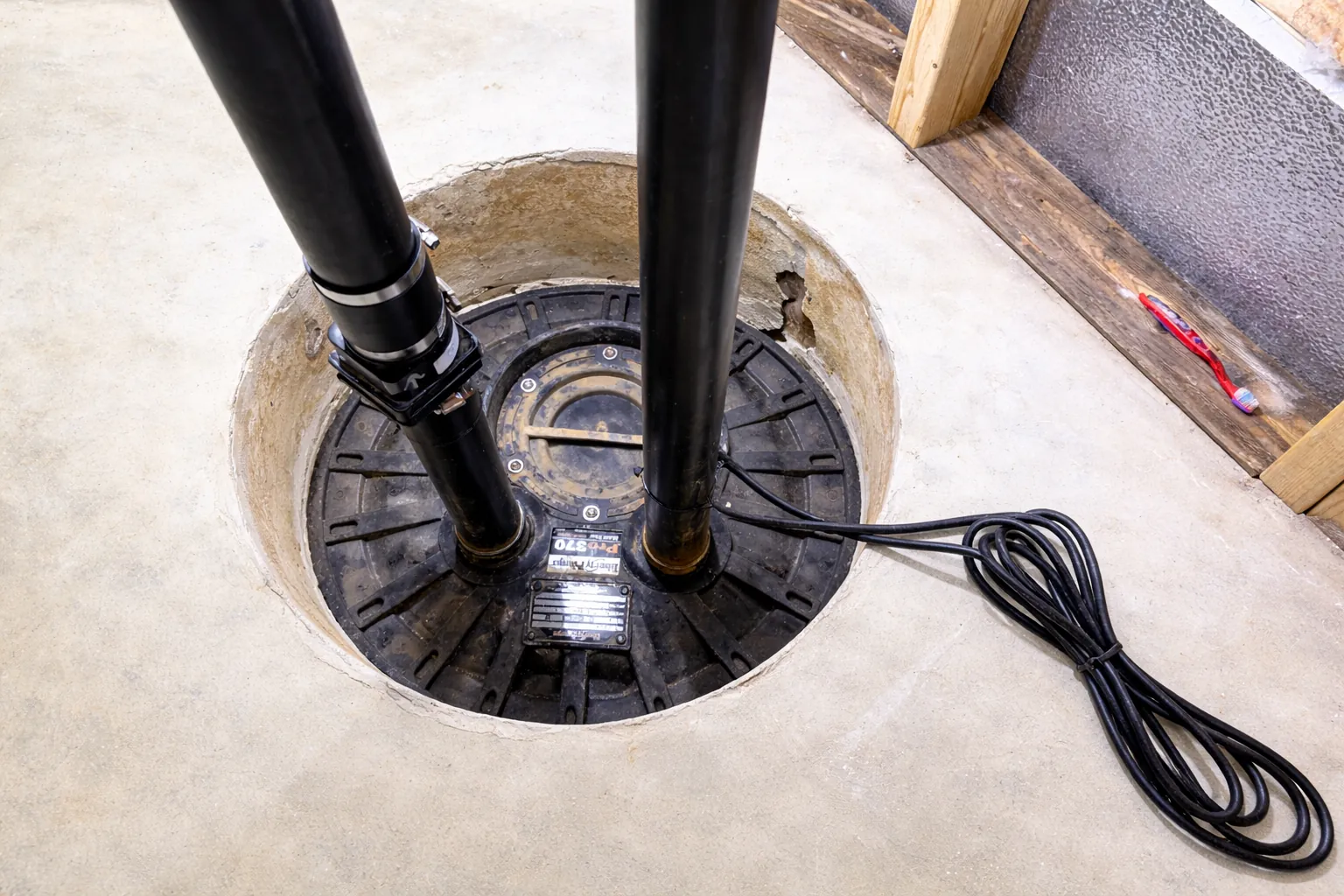
Sealed sewage ejector pit lid with discharge and vent pipes
A sealed sewage ejector lid with its discharge and vent pipes.
Quick tip: if the lid lifts off easily and you can see water, it's a sump pit, not a sewage ejector. If it's bolted down with pipes through it, don't open it. Sewage basins hold waste and gases.

How a Sewage Ejector Pump Works

The idea is simple, but the system is built for heavy-duty work:
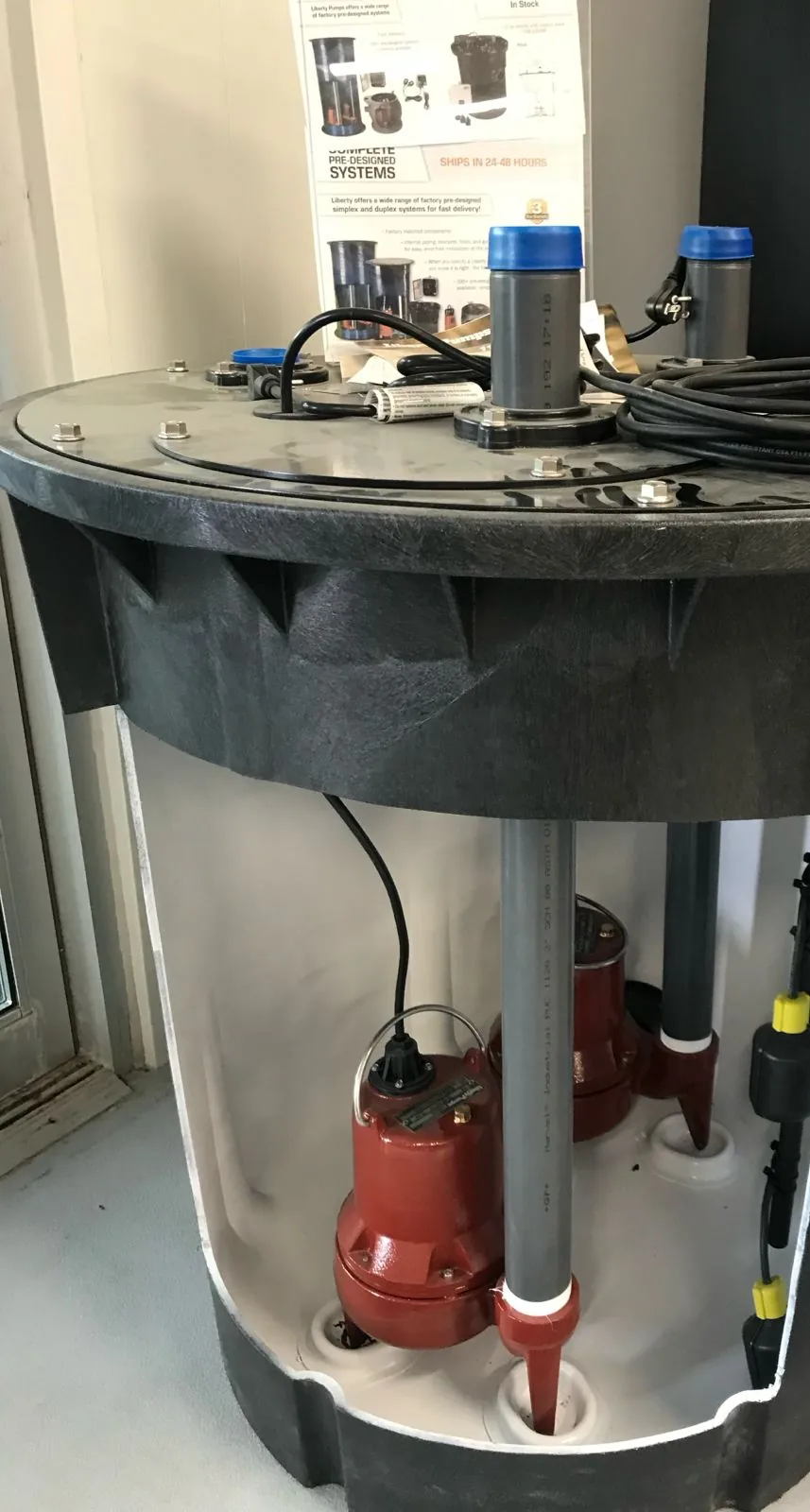
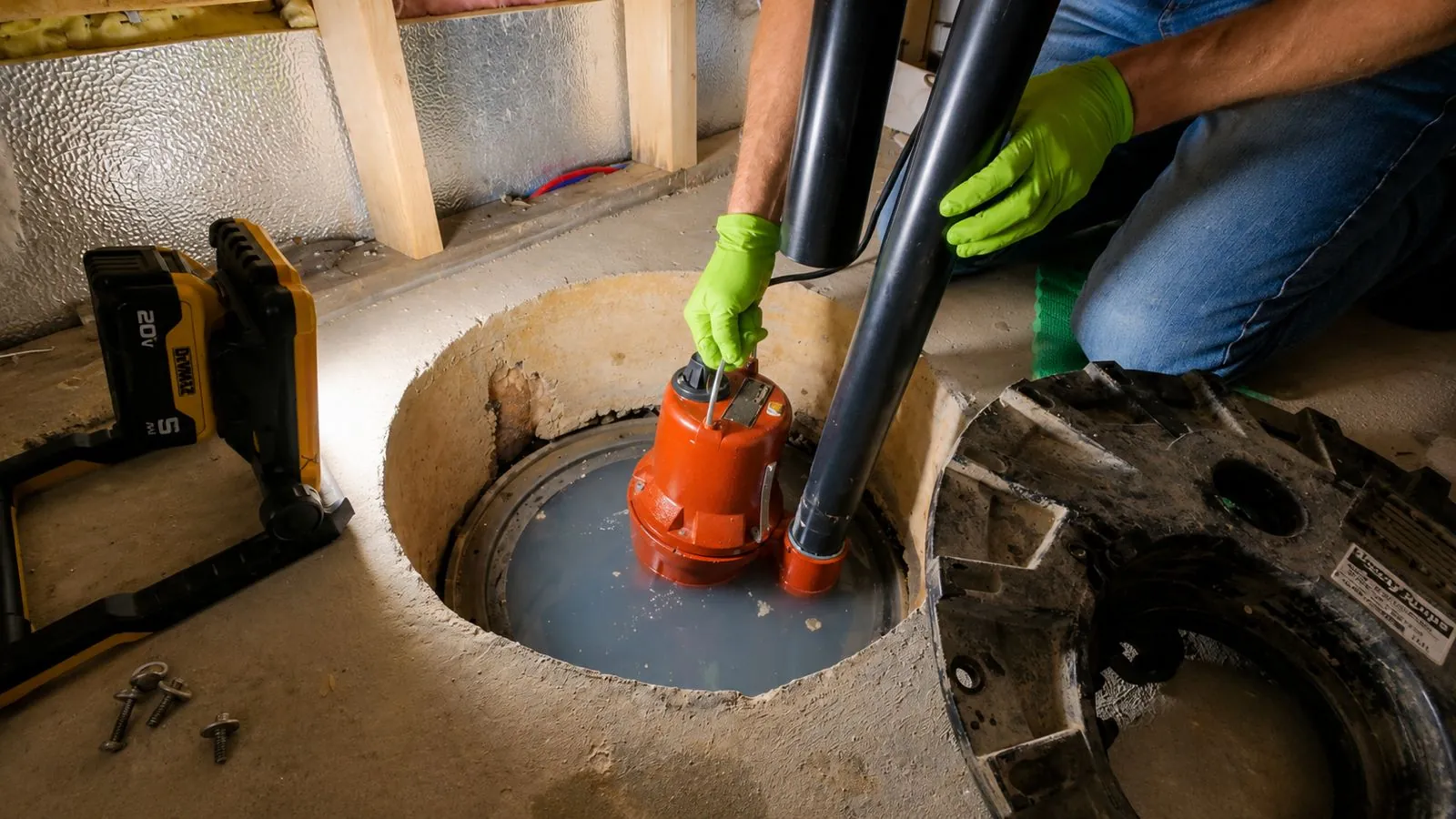
Cutaway of a sealed sewage ejector basin showing the pump, discharge pipe and float switches
Inside a sealed basin: the pump, discharge pipe and float switches.
  1. 1

    Wastewater flows in

    Toilets, sinks and showers drain into the sealed basin.

  2. 2

    The basin fills

    A float switch inside tracks the water level.

  3. 3

    The pump turns on

    When the level reaches a set point, the pump starts automatically.

  4. 4

    Waste is pumped up

    It travels through a discharge pipe, typically 2 inches.

  5. 5

    Gravity takes over

    Once it reaches the main drain, it flows out normally.

  6. 6

    The vent balances pressure

    This prevents airlocks and keeps everything flowing.

‍

Do Sewage Ejector Pumps Grind Waste?

Many do. Systems with a grinder pump or a solids-handling impeller break down waste so it can travel through smaller pipes. That's why one ejector can handle a full bathroom group: toilet, shower, bathtub and laundry sink.

When Do You Need a Sewage Ejector?

When fixtures sit below the main sewer line. If your basement plumbing is lower than your home's main drain, gravity alone won't work.

When adding a basement bathroom. This is the most common reason. We've met many homeowners who wanted a full bathroom but whose main drain sat too high. Without an ejector, the answer would be no. With one, you can have a full 3- or 4-piece bathroom, a laundry room, an in-law suite or a basement apartment.

For basement renovations and legal units. Across Vaughan and York Region, many legal basement apartments rely on ejector systems to meet plumbing requirements.

The good news: in most York Region homes, especially newer builds, the main drain runs below the basement floor, so an ejector isn't needed. The only way to know for sure is to measure. Our basement plumbing team locates your main drain, checks its depth against the basement slab, and tells you whether gravity drainage will work.

Why an Ejector Opens Up Your Basement

When gravity can't do the job, an ejector lets you put plumbing almost anywhere in the basement. That means more usable living space, added property value, and the option of rental income from a basement unit.

What a Proper Installation Needs

A sewage ejector isn't a DIY project. Done right, it includes:

Cut corners and you get odours, frequent cycling, early pump failure, or sewage backing up into the basement.

Common Problems We See

On real jobs across the GTA, the same issues come up again and again:

All of these are avoidable with proper design and installation.

!

What Happens If the Power Goes Out?

A sewage ejector runs entirely on electricity. In a power outage, the pump won't turn on, so wastewater keeps collecting in the basin with nowhere to go.

Until the power is back: don't use the toilets, sinks or showers connected to the ejector. If you keep using them, the basin can fill and back up, and in a finished basement that damage happens fast.

The smart upgrade: a high-water alarm

If the pump fails, loses power or seizes, the water in the basin starts to rise. A high-water alarm sounds as soon as it reaches a set level, so you know before anything backs up. We often recommend one, especially for finished basements and homes with basement apartments.

Ask About a High-Water Alarm

‍

Maintenance and Lifespan

A well-installed sewage ejector typically lasts 7 to 15 years, depending on how much it's used and how well it's built. To get the most from yours:

  • ✓Don't flush wipes or anything other than toilet paper. Wipes are one of the most common causes of clogs we clear on drain cleaning calls.
  • ✓Test it periodically by running the connected fixtures.
  • ✓Listen for unusual cycling or noise.
  • ✓Watch for odours or signs of leaking around the lid.
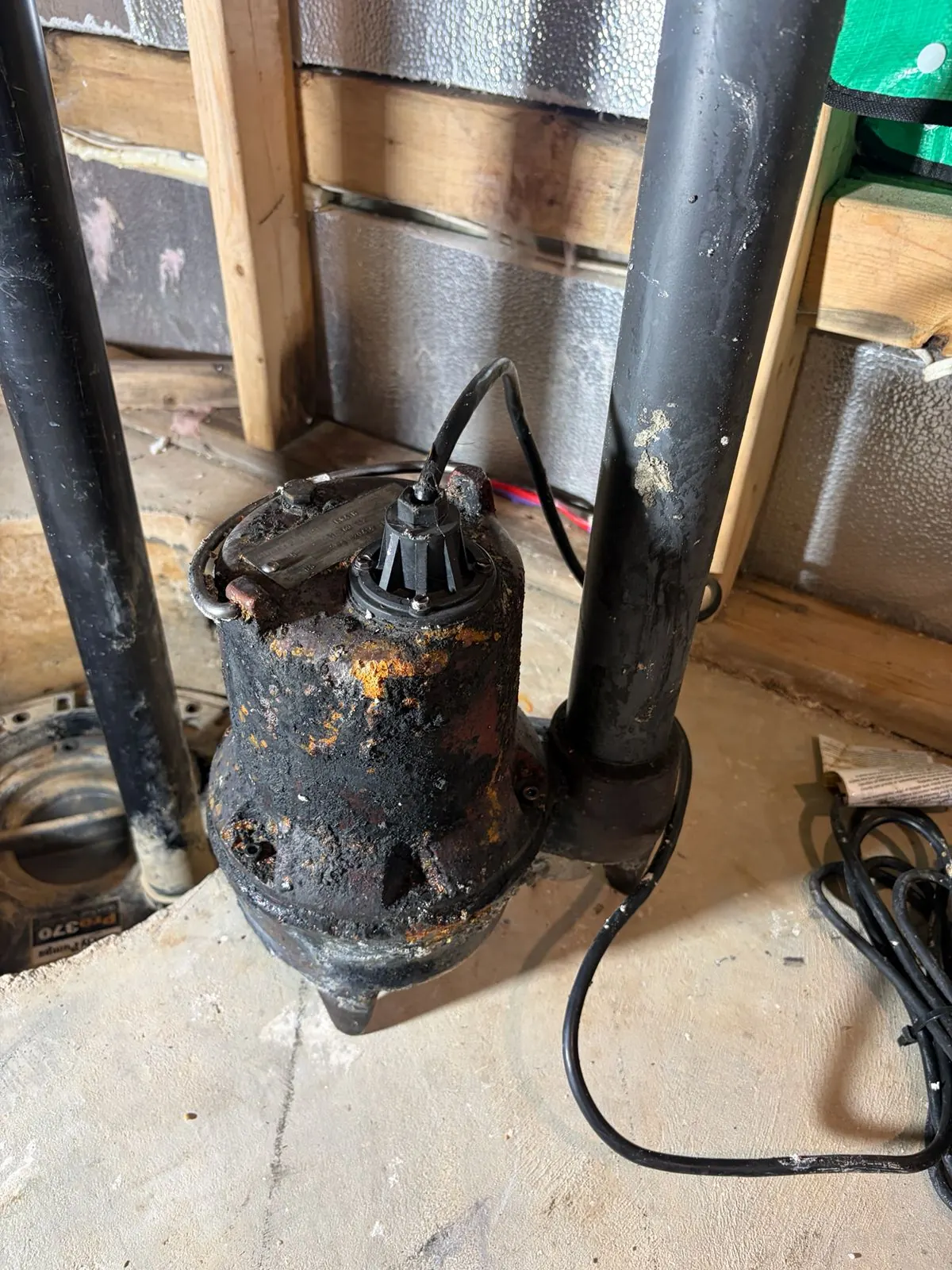
Corroded sewage ejector pump removed after years of service
A worn-out ejector pump we replaced. Corrosion like this builds up over years of service.

‍

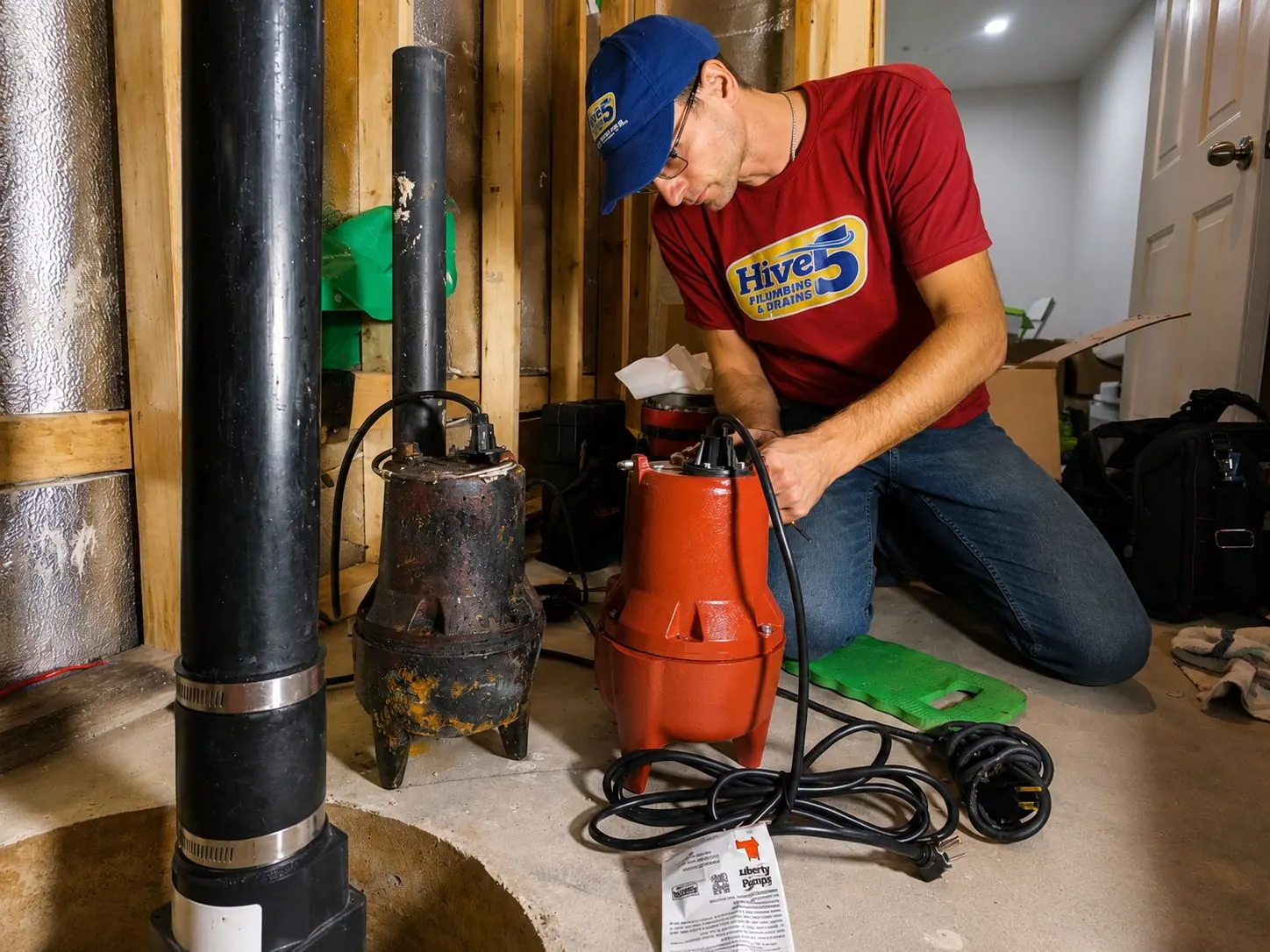
Hive 5 plumber preparing a new sewage ejector pump beside the old one
Swapping a worn-out ejector pump for a new one in a Vaughan basement.

When Gravity Can't Do the Job, an Ejector Can

A sewage ejector pump is what makes basement plumbing possible when gravity can't do the job. We've helped many homeowners turn "it can't be done" into a working basement bathroom or living space.

If you're planning a basement project, or you're not sure whether your home needs an ejector, we'll walk you through your options clearly, honestly and without pressure.

Explore Basement Plumbing

‍

‍

Licensed & Insured
Your home and property will be protected as if it was our own hive.
24/7 Emergency
Got a last minute issue? Don't worry, our colony has you covered!
100% Satisfaction
We’ll do the job right every time, to make sure you’re bee-yond satisfied.
Free Estimates
We’ll listen to your issue and provide you with a free, no pressure quote.

Sewage Ejector Pump FAQs

Do I need a sewage ejector pump for my basement bathroom?
arrow_forward_ios

Only if your basement fixtures sit below your main sewer line. In that case, wastewater can't drain by gravity, so it has to be pumped up. In most York Region homes, the main drain runs below the basement floor, so an ejector isn't needed.

How do I know if my main drain is higher than my basement plumbing?
arrow_forward_ios

The only reliable way is to inspect and measure. We locate your main drain, check its depth against the basement slab, and confirm whether gravity drainage is possible.

Is a sewage ejector pump noisy?
arrow_forward_ios

You may hear a brief hum when the pump runs, usually from a few seconds to under a minute, depending on how much the fixtures are used. If it's very loud or runs too often, it may point to an installation problem, an undersized pump or a mechanical issue.

What happens if the sewage ejector pump fails?
arrow_forward_ios

The basin keeps filling and can eventually overflow, causing a sewage backup. That's why we recommend a high-water alarm. If it's already backing up, call our 24/7 emergency plumbers.

Do sewage ejector systems smell?
arrow_forward_ios

Not when installed correctly. If you notice odours, the cause is usually a failed or loose lid seal, improper venting, or dry traps in the connected fixtures.

Does a sewage ejector pump need maintenance?
arrow_forward_ios

Yes, though not much. Have it inspected periodically, listen for unusual operation, and keep wipes and other non-flushables out of the system. Professional servicing catches problems early.

How long does a sewage ejector pump last?
arrow_forward_ios

Typically 7 to 15 years, depending on usage and the quality of the pump and installation.

Can I use my basement bathroom during a power outage?
arrow_forward_ios

No. The pump needs electricity, so wastewater just collects in the basin. Avoid using the connected toilets, sinks and showers until the power is back, or the basin can back up.

Can a sump pump and a sewage ejector share the same pit?
arrow_forward_ios

No. A sump pump handles clean groundwater that's discharged outside, while a sewage ejector handles wastewater that goes to the sanitary sewer. They need separate basins and separate pumps. Learn more about our sump pump installation and repair.

Planning a Basement Bathroom?

Whether you're adding a basement bathroom, replacing a worn-out pump or adding a high-water alarm, Hive 5 Plumbing & Drains installs, services and repairs sewage ejector systems across Vaughan and York Region. We'll check your basement and tell you exactly what it needs.

‍

‍

Give us a buzz before you build!